
Engineering Research Center
Research Center for Trustworthy Distributed Physical Systems
ERC-TRIPS · TRustworthy dIstributed Physical Systems
A world is coming where everything is connected and countless robots work together —
we make that world work reliably.
Supported by the Ministry of Science and ICT (MSIT), Republic of Korea · Research period: July 1, 2026 – June 30, 2033
ㅡ
ERC-TRIPS Center is an Engineering Research Center (ERC) supported
by the Ministry of Science and ICT (MSIT) and the National Research Foundation of a Korea (NRF) since 2026.
Our Mission
Building on control theory, we realize trustworthy distributed physical systems that continue their missions on their own — even when parts of them fail or come under attack — through two pillars: trustworthiness and distributedness.
In the hyper-connected era, physical systems are no longer individual machines but vast, interacting systems-of-systems. IoT devices are projected to grow to 39 billion by 2030, and decision-making is shifting from central servers to the edge, to machines, and to autonomous agents — humans can no longer be in every loop. In such an environment, a single failure or cyber attack can cascade through the entire system.
Our center tackles this problem along two axes.
Trustworthiness
Mathematical methodologies grounded in deterministic, probabilistic, and cryptographic tools build reliability into every function by design. Safety is mathematically guaranteed even under sensor faults, communication delays, and malicious attacks.
Distributedness
The blended dynamics methodology enables fully distributed control with collective decision-making and no central supervisor. Single points of failure disappear, and when parts are damaged, the rest compensate autonomously.
Research
Today’s semi-distributed control systems suffer from single points of failure and limited autonomy, while most existing distributed-control research rests on unrealistic assumptions: homogeneous agents, fixed network topologies, and benign behavior. ERC-TRIPS develops fully distributed control theory and technology that guarantees trustworthiness in real-world conditions — heterogeneous agents, open multi-agent systems where agents join and leave freely, malicious attacks, faults, imperfect sensing and communication, and safety constraints. Three research groups cover the full cycle from theory to algorithms, software, and experimental validation.
Group 1 · Distributed Control
Establishes practical distributed control design based on blended dynamics theory: consensus and distributed control that converge under communication delay, loss, and disconnection; controller architecture design and state estimation for high-reliability systems; lightweight communication and computation via event-triggered and low-dimensional transmission; and extensions of the theory to manifolds and integer arithmetic, opening the door to robotics applications and homomorphic encryption.
Group 2 · Trustworthiness Assurance
Builds protection for distributed physical systems through three mathematical approaches. Deterministic: distributed safety filters and robust control guarantee worst-case reliability. Probabilistic: risk-aware control and distributionally robust optimization (DRO) provide quantitative reliability measures. Cryptographic: homomorphic encryption and verifiable computation encrypt communication and computation, structurally blocking attacks.
Group 3 · Physical System Coordination
Implements coordination of physical systems over time-varying networks: robot formation control, distributed perception (SLAM) without a central server, and self-organization and optimal control of heterogeneous multi-robot systems. The group deploys the outputs of Groups 1 and 2 on real platforms, validates them through repeated experiments, and feeds the results back into theory.
Key Deliverables
- Theory — advanced blended dynamics theory, stability theory for heterogeneous and open multi-agent systems, trust-guaranteeing control theory, security and privacy guarantees.
- Algorithms — distributed control, estimation, and optimization; robust and safe control; probabilistic and learning-based control; encrypted control.
- Open-source software — an integrated platform of design, verification, and operation tools for distributed control, released on GitHub with the goal of becoming the global open-source standard of the field, as CVX did for convex optimization.
- ERC Arena — a large-scale testbed with a 100-unit heterogeneous robot swarm, high-precision localization, and fault/attack injection systems.
- Benchmark data — public datasets covering normal and abnormal scenarios, network delay and loss, and environmental disturbances.
Faculty
People are the core asset of the center. Twelve leading experts in control theory from six institutions have joined forces.
Group 1 · Distributed Control

AffiliationProfessor, Electrical & Computer Engineering, Seoul National University
ExpertiseNonlinear control · blended dynamics theory
HighlightsIEEE Fellow (2026) · Member, Korean Academy of Science and Technology (2024) · IFAC Distinguished Lecturer (2023) · General Chair, IFAC World Congress 2026 · former Associate Editor of Automatica and IEEE TAC
Homepagehyungbo.github.io

AffiliationProfessor, Electrical Engineering, POSTECH · Endowed Chair Professor (2021–2030)
ExpertiseExpert in time-delay dynamical systems
HighlightsKorea Engineering Award (2020) · Member, Korean Academy of Science and Technology (2021) · Springer books Time-delay Systems (2019), Networked Control Systems (2012) · President-elect, ICROS
Homepagespac.postech.ac.kr

AffiliationProfessor, Electrical Engineering & Computer Science, DGIST
ExpertiseExpert in high-reliability cyber-physical system (CPS) design
HighlightsProvost, DGIST (2025–present) · Director, Resilient CPS Research Center (2014–2022) · 10 years at Xerox Research · Ph.D., University of Michigan · Editor, IEEE Trans. Industrial CPS
Homepagescholar.dgist.ac.kr (profile)

AffiliationAssistant Professor, Electrical & Computer Engineering, Seoul National University
ExpertiseNeuromorphic system theory · lightweight communication and computation
HighlightsPostdoc, University of Cambridge (2019–2021) · Assistant Professor, INRIA Lille (2022–2024) · IFAC NOLCOS Young Author Award Finalist (2019)
Homepagejingyulee92.wordpress.com
Group 2 · Trustworthiness Assurance

AffiliationProfessor, Aerospace Engineering & Interdisciplinary Program in AI, Seoul National University
ExpertiseRobot intelligence · data-driven safety-guaranteed control
HighlightsMember, National Academy of Engineering of Korea (2018) · Plenary Speaker, IEEE/RSJ IROS 2025 · IEEE ICRA Best Paper Award (2021) · h-index 63
Homepagelarr.snu.ac.kr

AffiliationProfessor, Electrical & Computer Engineering, Seoul National University
ExpertiseDistributionally robust control (DRO) · risk-aware control
HighlightsAssistant Professor, University of Southern California (2016–2018) · Eli Jury Award · NSF Research Initiation Award · Vice-Program Chair, IEEE CDC 2026 · Vice-Chair, IFAC Stochastic Systems TC
Homepagelds-insoon.github.io

AffiliationAssistant Professor, Aerospace Engineering, Seoul National University
ExpertiseGuidance and control · safety filter design
HighlightsLecturer, Cranfield University (2024–2025) · Cranfield 75th Anniversary Research Fellowship (2021)
Homepageaail.snu.ac.kr

AffiliationAssistant Professor, Electrical & Information Engineering, Seoul National University of Science and Technology
ExpertiseInternational pioneer in encrypted control via homomorphic encryption
HighlightsPostdoc, KTH Royal Institute of Technology · invited article in Annual Reviews in Control · multiple domestic and US patents on encrypted control · organizer of encrypted-control sessions at IEEE CDC and IFAC conferences (2021–)
Homepagejunsookim4.wordpress.com

AffiliationAssistant Professor, Electrical Engineering, KAIST
ExpertiseStochastic system theory · probabilistic control of autonomous systems
HighlightsPh.D., Caltech (2023) · youngest faculty appointment at KAIST (age 24) · Springer book Linear Systems: Theory and Application (2026) · Associate Editor, IEEE Robotics and Automation Letters
Homepagesoojean.github.io
Group 3 · Physical System Coordination

AffiliationProfessor, Mechanical & Robotics Engineering, GIST
ExpertiseInternational leader in formation control and distributed optimization
HighlightsPresidential Citation (2024) · Elsevier world top 1% researcher for five consecutive years · Automatica top-10 most-cited paper (2,784 citations) · Editor-in-Chief, Int. J. Control, Automation and Systems · four Springer books
Homepagesites.google.com/view/hyosungahn
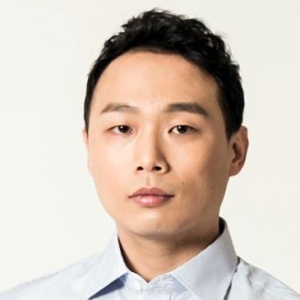
AffiliationAssociate Professor, Electrical Engineering, POSTECH
ExpertiseMulti-robot control · multi-objective optimization-based robot control
HighlightsPh.D., Kyoto University (2015) · KIST Center for Robotics Research (2015–2019) · KIEE Young Researcher Award (2021) · ACA Temasek Young Educator Award (2026) · Associate Editor, IEEE TSMCS
Homepagesites.google.com/view/postechctrl

AffiliationAssistant Professor, Mechanical & Robotics Engineering, GIST
ExpertiseDistributed SLAM · serverless distributed perception
HighlightsPh.D., Seoul National University (2019) · Postdoc, Simon Fraser University · Outstanding Associate Editor Award, ICRA 2025 · Associate Editor, IEEE Robotics and Automation Letters
Homepagempil-gist.github.io
Participating Institutions
Seoul National University (host) · KAIST · GIST · DGIST · POSTECH · Seoul National University of Science and Technology — 6 institutions, 12 faculty members, and over 120 graduate researchers.
Funding and Research Period
ERC-TRIPS is an Engineering Research Center supported by the Ministry of Science and ICT (MSIT) of the Republic of Korea. The research period is July 1, 2026 – June 30, 2033 (seven years).
Contact
ASRI building 133, room 316 / contact@erc-trips.re.kr